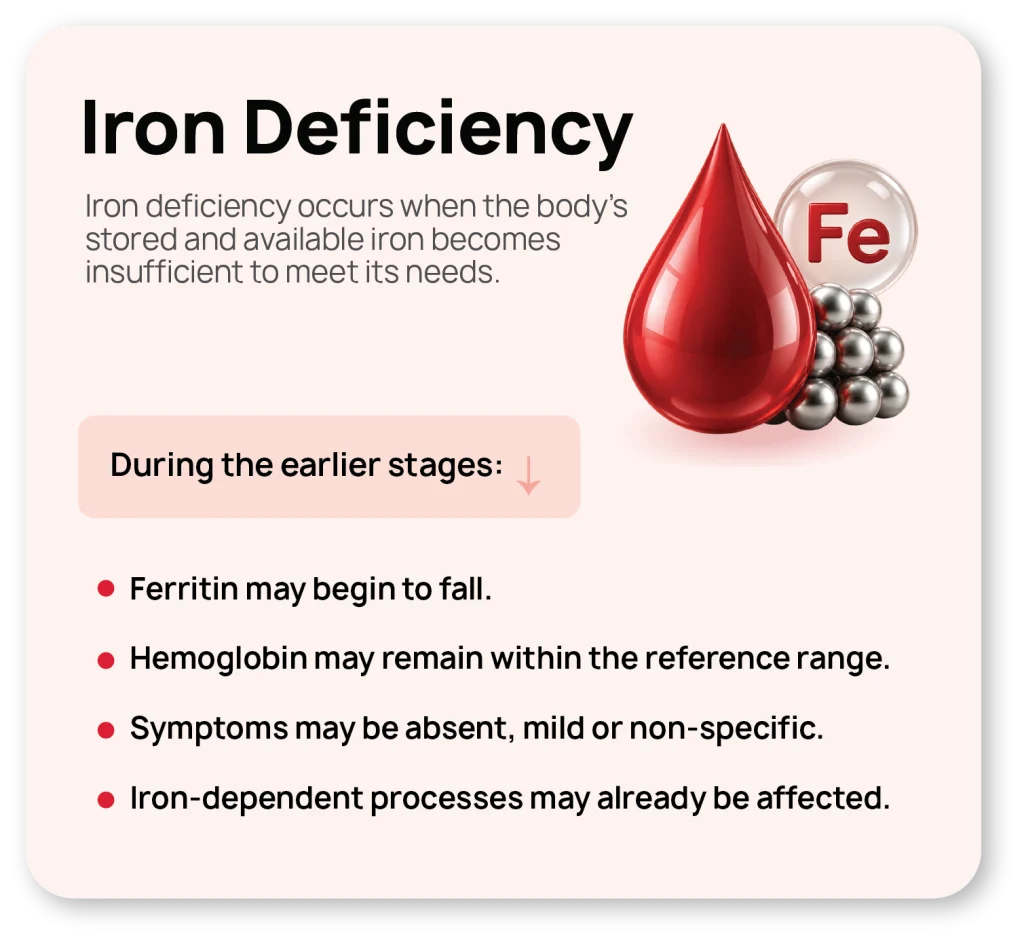
Iron deficiency does not always begin with obvious symptoms or an abnormal hemoglobin result. The body’s Iron stores may start to decline first, gradually reducing the amount of Iron available for essential functions.
Iron is an essential component of hemoglobin, enabling red blood cells to transport oxygen to the brain, muscles and other tissues.
Energy and Physical Function
Iron contributes to cellular processes involved in energy production. Inadequate Iron availability may therefore affect physical capacity and everyday performance.
Growth and Cognitive Function
Adequate Iron is particularly important during periods of rapid growth and development, when the body’s requirements may increase.
Why Iron Matters
Iron Helps Keep Oxygen and Life Moving
Iron is an essential mineral that the body cannot produce. It must therefore be obtained through food and, when professionally recommended, supplementation. Its best-known role is in the formation of hemoglobin, the protein in red blood cells responsible for carrying oxygen from the lungs to tissues throughout the body. But the importance of Iron extends beyond the bloodstream.
Iron Deficiency vs Anemia
Iron Deficiency Is Not Always Anemia
The terms “Iron Deficiency” and “Iron-Deficiency Anemia” are often used interchangeably, but they do not describe exactly the same condition.
How Iron Deficiency Develops
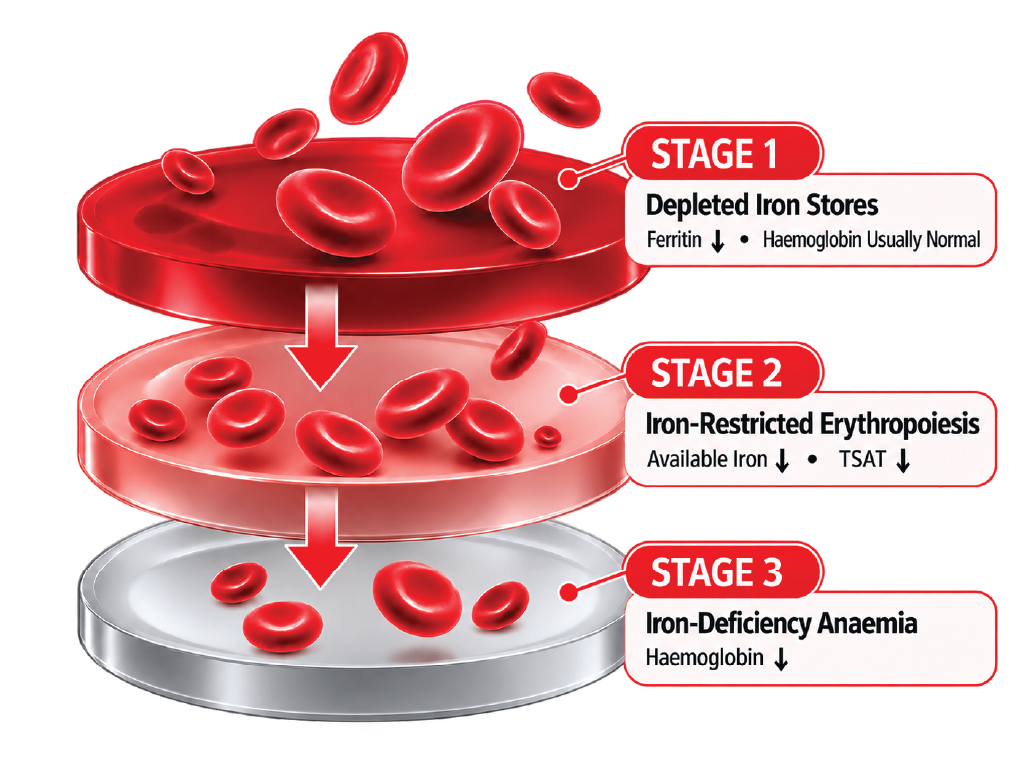
A GRADUAL PROCESS
From Declining Stores to Iron-Deficiency Anemia
Iron deficiency usually develops over time. Its progression is not identical in every person, and laboratory findings must always be interpreted within the appropriate clinical context.
Why Iron Levels Fall
Anemia Is the Tip. Iron Deficiency Begins Below.
Above the surface, Iron-deficiency anemia may be identified by reduced hemoglobin. Beneath it, declining Iron stores and restricted Iron availability may already have been developing.
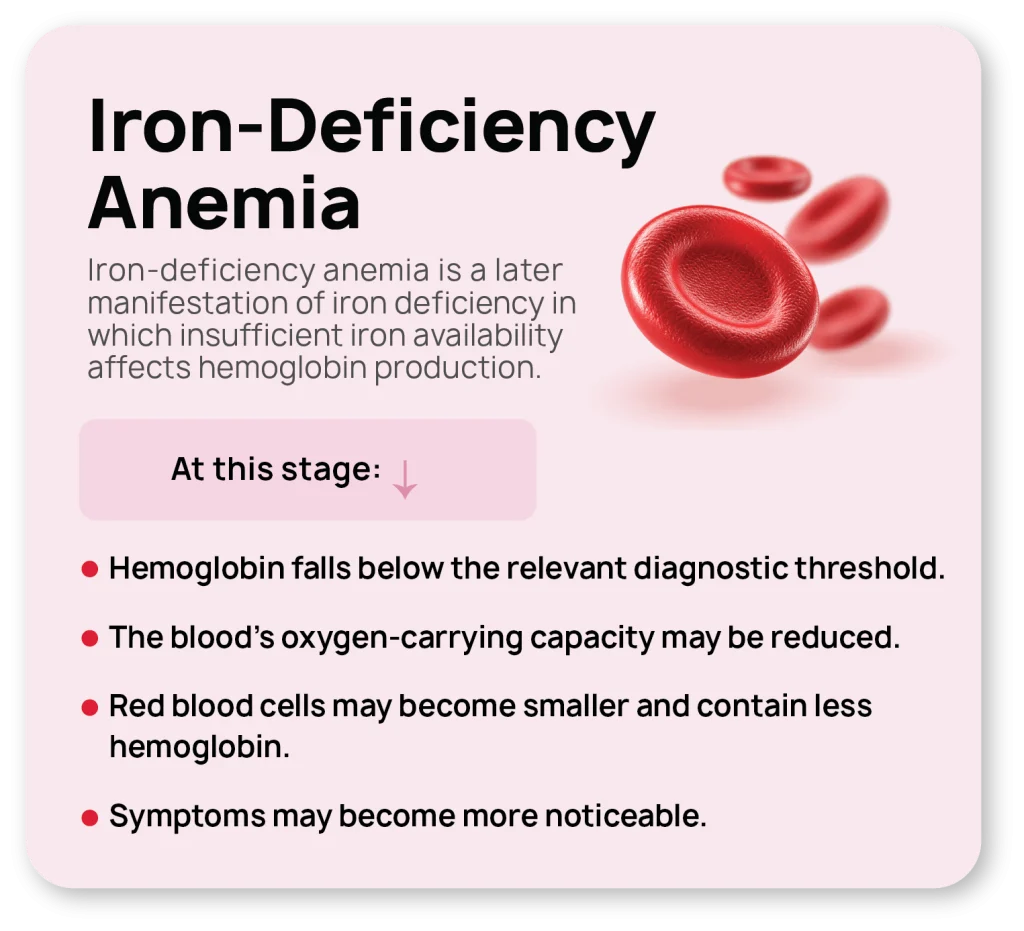
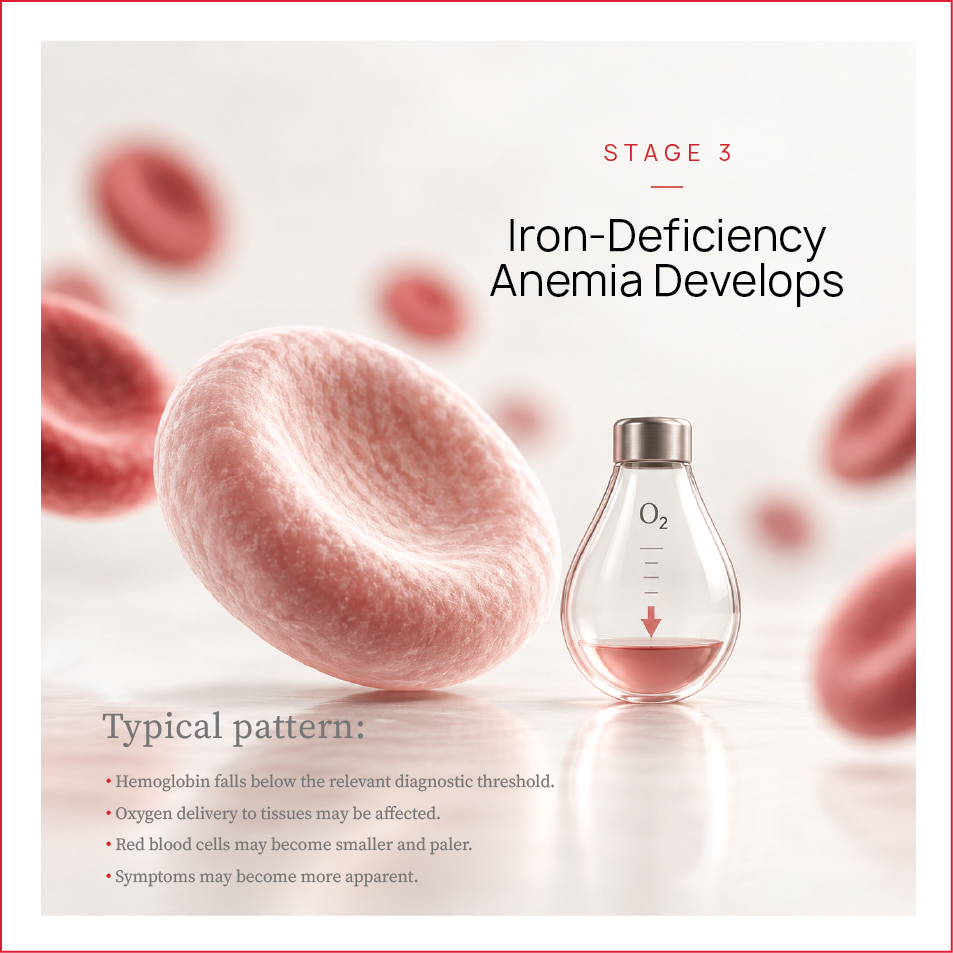
Iron-Deficiency Anemia
Hemoglobin has fallen below the relevant diagnostic threshold.
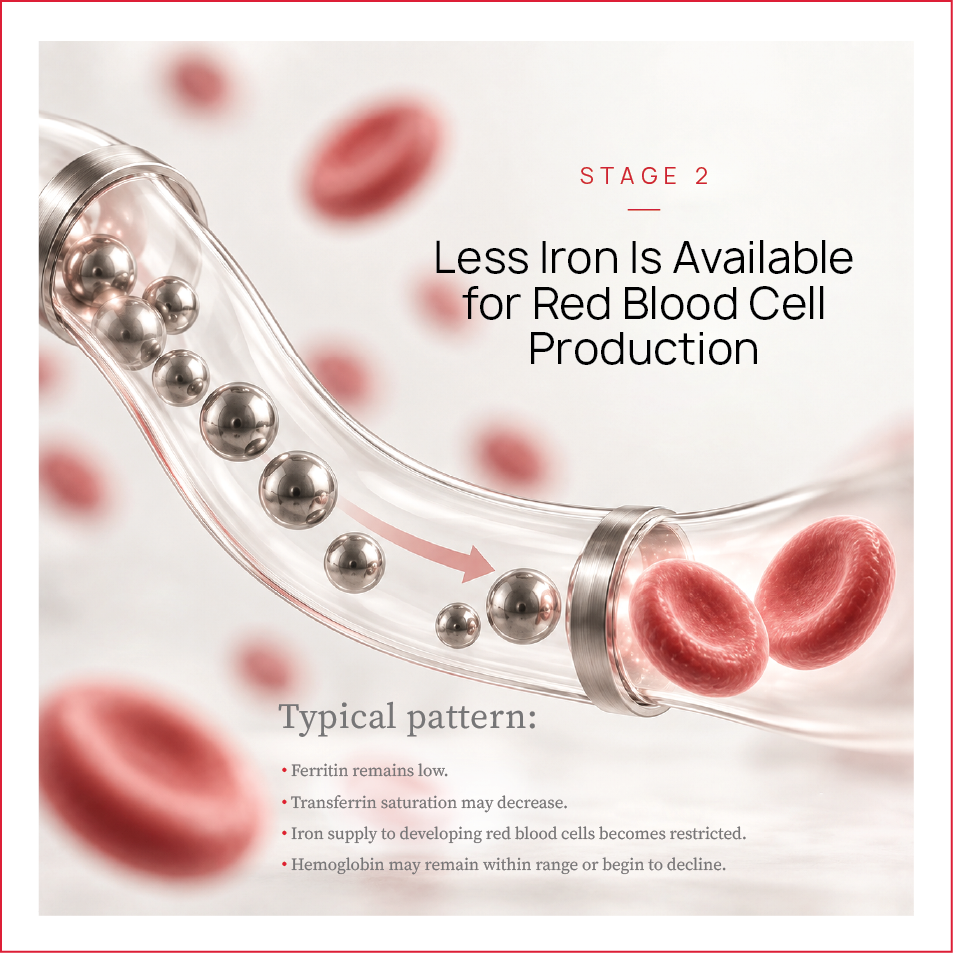
Iron-Restricted Erythropoiesis
Less Iron is available to support effective red blood cell production.
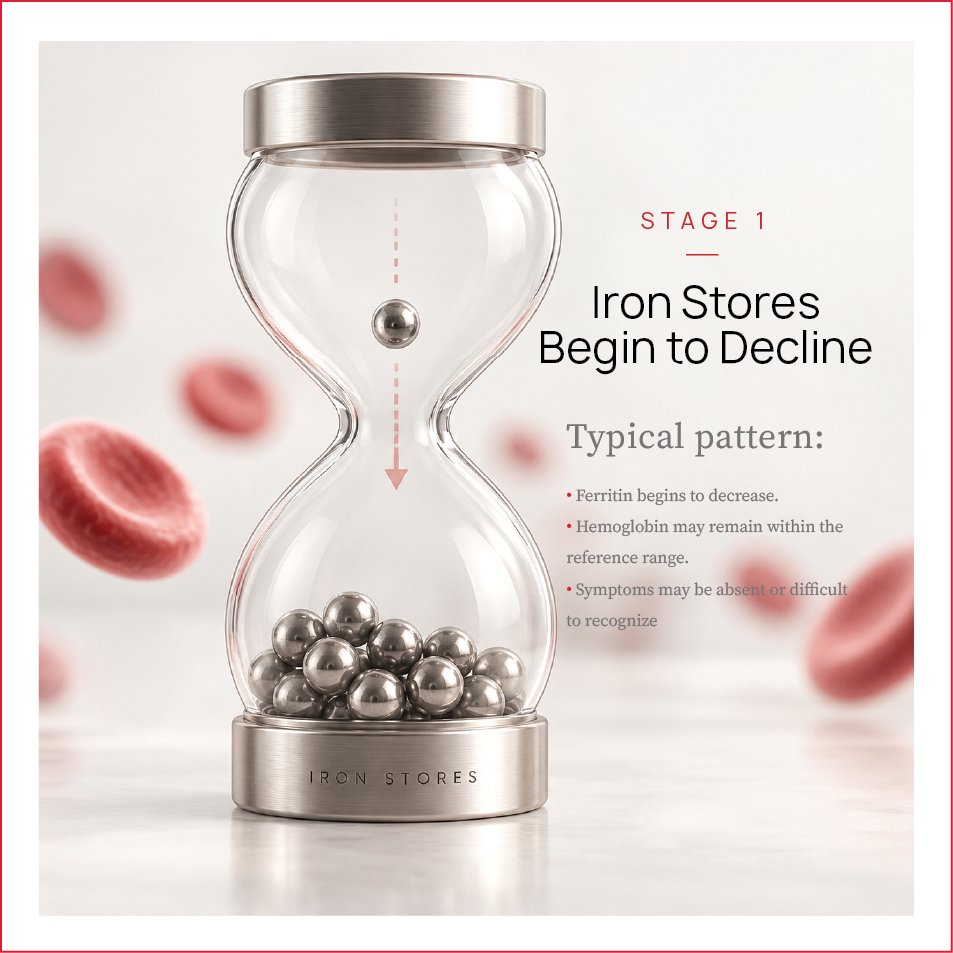
Depleted Iron Stores
Ferritin may decline while hemoglobin remains within the reference range.
Who May Be at Risk
WHEN IRON NEEDS FALL OUT OF BALANCE
The Same Deficiency Can Have Different Causes
Understanding the underlying cause is an important part of addressing Iron deficiency.
Not Enough Coming In
Low Iron intake or restrictive diets may leave daily Iron needs unmet.
More Is Being Needed
Pregnancy and periods of rapid growth can increase the body’s Iron requirements.
Too Much Is Being Lost
Heavy periods, childbirth, bleeding, or frequent blood donation can deplete Iron stores.
Not Enough Is Being Absorbed or Used
Digestive conditions, gastrointestinal surgery, or chronic inflammation can affect Iron absorption or availability.
Who May Be at Risk 2
WHO MAY NEED CLOSER ATTENTION—AND WHY?
Iron Deficiency Does Not Affect Every Life in the Same Way
Age, physiology, diet, lifestyle and health status influence the balance between the Iron the body receives, uses and loses.
The consequences may also differ. For one-person, declining Iron may first affect exercise tolerance; for another, it may interfere with concentration, productivity, pregnancy or healthy childhood development.
Menstruating Women
Heavy or prolonged periods increase Iron loss. Low Iron may contribute to:
Fatigue and weakness
Poor concentration
Dizziness or headaches
Reduced exercise capacity
Vegetarians and Vegans
Plant-based Iron is less readily absorbed. Iron status depends on:
Iron intake and dietary variety
Meal composition and absorption
Individual Iron needs
Adolescents
Rapid growth and menstrual blood loss increase iron needs. Low iron may affect:
Energy and concentration
Physical endurance
School and daily activities
Frequent Blood Donors
Frequent donations may deplete Iron stores faster than diet restores them.
Allow time for iron recovery
Consider periodic assessment, especially with fatigue
Endurance Athletes
Intense training, Iron loss, and restrictive diets may increase deficiency risk. Possible effects include:
Reduced endurance and performance
Slower recovery
Persistent fatigue
People with Gastrointestinal Conditions
Some conditions impair Iron absorption or cause blood loss:
Coeliac disease
Inflammatory bowel disease
Previous gastrointestinal surgery
Chronic gastrointestinal bleeding
Adults with Unexplained Iron Deficiency
Investigate possible blood loss or an underlying condition, particularly in:
Men
Postmenopausal women
Iron Needs Through Life
Iron requirements change during childhood, adolescence and pregnancy. Learn who may be at risk, which signs deserve attention and when professional advice is recommended.
Common Questions About Iron
Find clear, practical information about iron deficiency during childhood and pregnancy.
Rapid growth increases the body’s need for Iron. Children may be more vulnerable when their diet contains too little Iron, their food choices are limited, or health conditions interfere with Iron absorption.
Possible signs include tiredness, pale skin, irritability, reduced appetite, difficulty concentrating and lower tolerance for physical activity. These symptoms are not specific to Iron deficiency, so professional assessment may be needed.
During pregnancy, additional Iron supports the expansion of maternal blood volume, increased red blood cell production and the development of the placenta and baby.
Persistent fatigue, weakness, dizziness, shortness of breath, headaches, pale skin, rapid heartbeat or unusual cravings may be associated with low Iron. Because these symptoms can have several causes, blood testing and medical assessment are important.
Iron Deficiency Does Not Always Announce Itself
Iron deficiency can develop gradually. Early signs may be mild, non-specific or mistaken for stress, insufficient sleep, pregnancy-related changes or the demands of everyday life.
Persistent Fatigue
Difficulty Concentrating
Headaches and Dizziness
Shortness of Breath
Reduced Physical Capacity
Pale Skin
Cold Hands and Feet
Rapid or Noticeable Heartbeat
Hair Shedding
Brittle or Changed Nails
Sore Tongue or Cracks Around the Mouth
Restless Legs
Unusual Cravings
ABSORPTION CHANGES THE EQUATION
Iron Only Works When Your Body Can Use It
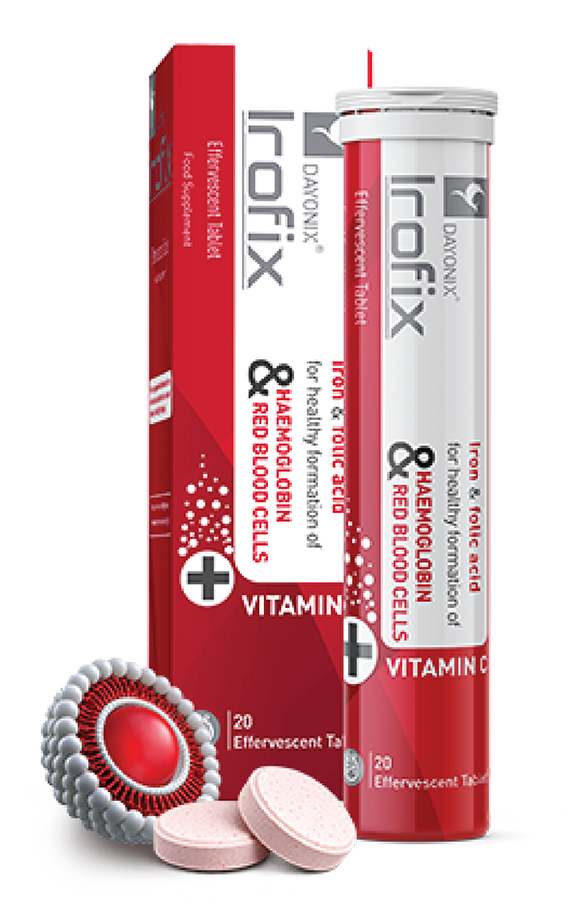
Effective Iron supplementation is not determined by the number of milligrams on the label alone. The Iron must first become available for absorption and the supplement must be tolerated well enough to be taken consistently as recommended.
Bioavailability Matters
A well-designed formulation helps deliver Iron in a form the body can absorb and use effectively.
Tolerability Supports Consistency
Gastrointestinal effect and metallic taste can make conventional oral Iron difficult for some people to continue. A better-tolerated formulation may help support adherence to the recommended supplementation plan.
More Is Not Always Better
A higher dose does not automatically mean a better result. The appropriate Iron strength should reflect the individual’s age, Iron status, life stage and clinical need.
Formulation Matters
The form in which Iron is delivered can influence its stability, interaction with the digestive system, sensory experience and bioavailability.